
VR vs. Physical Instructor Based Training
The aim of this randomized controlled study was to develop a self-directed training course in VR and to compare the learning outcomes of VR training with traditional face-to-face ultrasound training.
The researchers recruited 104 medical students from the University of Southern Denmark. 53 students were randomly selected to receive only face-to-face training, and 51 received only VR training. Afterwards, the students were asked to perform a basic ultrasound examination on a phantom and were evaluated and scored by a blinded assessor.
VR for Competence Assessment
his study was not about VR-based training, but rather investigated whether VR could be used as a competence assessment tool. When is a doctor ready to start performing contrast-enhanced ultrasound on patients?
The researchers behind the project developed a VR-based simulation test for contrast-enhanced ultrasound examinations. They included 25 doctors with different levels of experience in this procedure and gathered validity evidence to see if the test could distinguish beginners from experts. They also defined a limit for passing the test.
VR as a Supplement to E-learning
The aim of this pilot study was to examine the learning effect of adding approximately 15 minutes of VR training to an existing e-learning course on ultrasound-guided placement of PVC.
The researchers behind the project recruited 19 medical students from University of Southern Denmark, where 9 students were randomly selected to receive only e-learning, while 10 students received only VR training. Afterwards the students were asked to place a PVC on a training phantom.
VR vs. E-learning
Medical ultrasound has evolved greatly over the past few years. It is no longer a tool reserved for specialists, but is now also used by doctors in emergency rooms and by medical students. This growing interest makes it imperative for educators to find new ways to instruct their students.
The aim of this randomized controlled pilot study was to compare the learning outcomes of basic ultrasound training via e-learning with that of virtual reality.
Our X-Ray Simulator is Now Live ⭐️🚀🩻
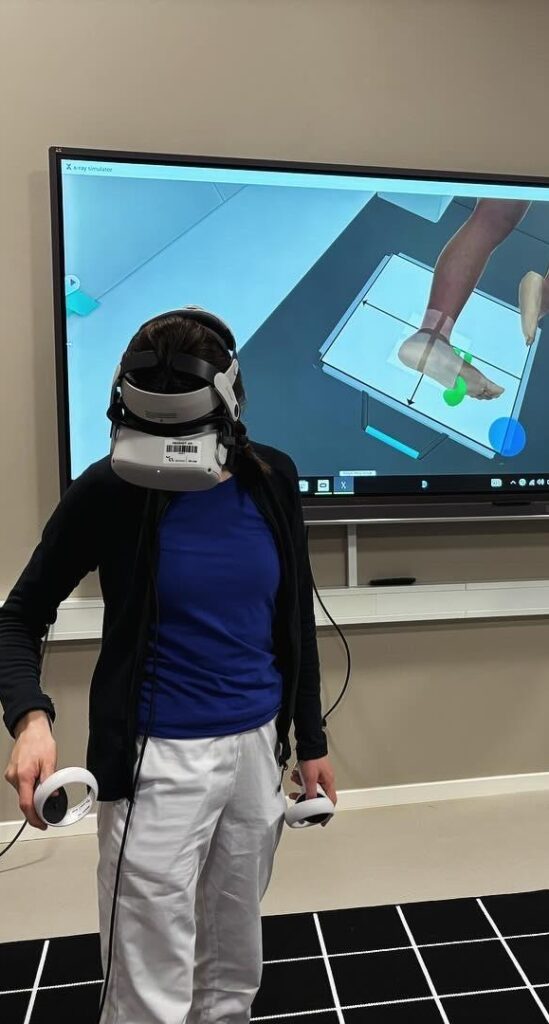
Our X-Ray Simulator is Now Live⭐️🚀🩻 We are thrilled to announce that our cutting-edge X-Ray simulator is officially released! A major step forward in simulation training for the healthcare sector, this tool is designed to provide an immersive, safe, and effective learning environment for radiography students. We’re particularly excited that UCL Erhvervsakademi og Professionshøjskole Radiography […]
What is a Virtual Energized Lab (VEL)?
What is a Virtual Energized Lab (VEL)? The Virtual Energized Lab, or VEL, is an immersive environment that simulates real-world labs and training facilities. This cutting-edge tool leverages the power of both virtual reality (VR) and desktop applications to create dynamic, interactive learning spaces where students and professionals can practice and refine their skills without […]
VitaSim receives seed investment to boost VR simulator for education in the healthcare sector.
VitaSim receives seed investment to boost VR simulator for education in the healthcare sector. We are very excited to share that we have secured an investment. 🚀🏥🩻🌟 This investment is a significant step towards our goal of optimizing education in the healthcare sector. It will also pave the way for an acceleration of the international […]
Training emergency ultrasound in virtual reality

Training in focused emergency ultrasound scans in virtual reality can help healthcare professionals detect internal bleeding faster.
Interns create VR simulations for healthcare training

Interns are working together to create VR training simulations for healthcare students at the nursing college in Odense.
VitaSim is presenting VR content at annual meeting for diagnostic imaging

This week VitaSim is presenting VR content at the annual meeting for diagnostic imaging.